

The world of auditing is changing rapidly: automation, AI tools, and a consulting-driven approach are on the rise. In this environment, auditors must not only verify facts, but also help businesses, public institutions, and international organizations make more informed decisions.
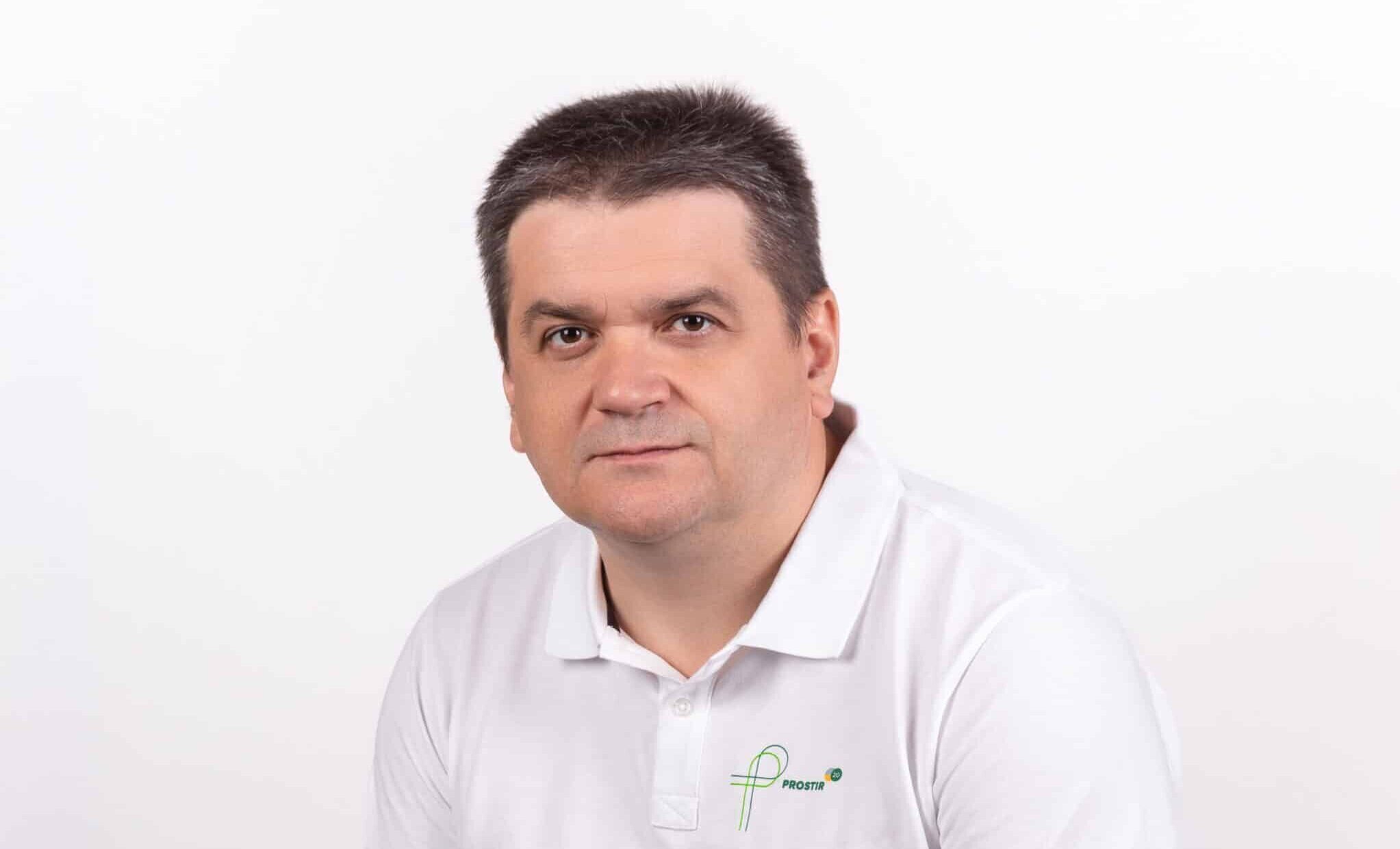
We spoke with Viktor Safinskyi, Head of the Audit Practice and a Partner at UHY Prostir Ukraine, about how the profession is transforming, which skills will be key in the coming years, and why the future of auditing is a blend of control and development.
Viktor, you joined the company almost at its inception in 2003. What motivated you then, and how did you know it was the right step?
Until that time I had worked as a chief accountant — first at a glass factory, then at companies trading petroleum products. I often had to cooperate with external auditors. They impressed me as true “superheroes” — people who could find answers even to the most complex questions. That’s when I felt the desire to become one of them.
What were your first months at UHY Prostir like? What challenges did you face then?
The start wasn’t easy — the company was still finding its way. There wasn’t a clear development strategy, a defined “client profile,” or a system for bringing in new partners.
For me personally, digitalization was a challenge, as it was still uncommon in the early 2000s. I had limited experience with computers, and here every employee had a laptop, most processes were automated, and we had unlimited access to the electronic legal database Liga:Zakon. At first it seemed difficult, but I saw how these tools improved the quality and efficiency of an auditor’s work — from analyzing large volumes of data to preparing reports and consultations. That’s when I felt I had entered an environment that was moving forward and thought in modern standards.
How was the audit team formed? What principles guided you in selecting people?
I joined the company at the invitation of its co-founder, Oleksandr Koinov, and started as an audit assistant, so in the first years I wasn’t responsible for team building. Later, when I was entrusted with separate audit engagements, I could decide whether I needed help and invite colleagues to join if they had availability.
The situation changed when the number of clients grew and the assignments became more complex. I was given the authority to recruit new people and build the team systematically. During interviews I focused less on ready-made professional knowledge and more on qualities without which it’s impossible to become a good auditor:
- honesty and the ability to openly say “I don’t know” if the answer is truly unknown;
- the skill to quickly find necessary information and work with large datasets;
- readiness to take on new things and step beyond the usual;
- composure and psychological compatibility with the team.
These principles became the foundation for creating a team that can work effectively even in the most challenging conditions.
In your view, how does a good auditor differ from a specialist who simply knows the standards and legislation well?
A good auditor is much more than a specialist who knows standards and laws. Professional knowledge is just the base. It’s important to present your position to the client in a clear, understandable, and concise way.
Sometimes a client disagrees with the auditor’s conclusions. In such cases it’s crucial to avoid conflict and do everything possible so differences don’t affect future cooperation. Trust is key in our job, and an auditor must earn it — so that the client is confident they can rely on the information provided.
The psychological component is equally important. An auditor must know how to listen, sense context, and communicate properly with different types of clients—both existing and potential. Regardless of the scope of the request or the size of the fee, every client should receive enough attention and responsible treatment.
What has changed—and what has remained unchanged—in the team over the years?
Our team has evolved significantly while preserving its core principles. We rely much more on technical tools: specialized software has become integral to planning and conducting audits, and all stages of work are now clearly governed by approved operating procedures. A separate stage of development is the active implementation of AI tools, which helps in formulating inquiries, preparing consultations, and analyzing large datasets. The team has also clearly defined its specialization, allowing us to focus on profile tasks and not disperse resources.
At the same time, what has always been fundamental for us remains unchanged: maximum attention and respect for every client, regardless of the scale or complexity of the request; the ability to analyze legislation in depth, identify contradictions, and seek opportunities for the best solutions; versatility and cross-coverage within the team; and a friendly, trusting atmosphere that helps sustain high work quality at all times.
Which events do you consider turning points in the development of UHY Prostir’s audit practice?
Looking back, several key stages significantly influenced our development: establishing the audit firm and building the team; engaging nationwide-level clients (including PJSC “Ukrnafta” and PJSC “AB InBev Ukraine,” among others); successfully passing external quality control reviews; accreditation with the World Bank and the EBRD; and entering new segments—NGO audits and audits of public institutions.
It’s also worth noting our joining UHY International in 2008, which was an important step in enhancing our market reputation and trust. After becoming part of the international network, we attracted our first major clients among international donor organizations, and the status of being part of a global network strengthened our proposals and confirmed our quality at an international level.
UHY Prostir Ukraine works with clients across segments—from international corporations to public institutions and NGOs. What’s the specificity of working with each of them?
Each segment has its own characteristics and requirements. Auditing public institutions is usually more complex due to the high bureaucratization of internal processes, numerous regulations, directives, and orders, as well as specific procedures for accessing information and approving requests.
With NGOs, it’s important to account for risks specific to the non-profit sector, such as:
- double-funding the same expenses from different grants;
- incorrect recognition of donations in reporting;
- lack of proper procurement procedures;
- using resources for non-intended purposes;
- difficulties in verifying the actual delivery of assistance.
In corporate audits we often face different challenges—the client’s desire to minimize the tax burden by any means, including approaches that do not always comply with legal requirements.
What are the biggest misconceptions clients have about auditors’ work?
Quite often clients don’t understand that an auditor cannot “turn a blind eye” to non-compliances with legal requirements and ask us not to reflect them in the audit report, merely promising to fix them later. In addition, some clients expect the auditor to optimize their tax burden in situations where the law offers no such opportunities. Sometimes there’s a misunderstanding of the essence of an audit itself—clients may restrict access to information or documents without fully realizing the scope of our work and responsibility.
Is there a client case or project you recall with particular pride?
Definitely PJSC “Ukrnafta,” one of the largest taxpayers in Ukraine. For this client we developed a detailed methodology for the consolidated calculation of corporate income tax and the centralized payment of VAT for all structural units of the company. The document, running to several hundred pages, became a practical handbook that we helped implement across Ukraine over two years. It was a large-scale, complex, and very valuable experience for the entire team.
Have there been situations where audit results significantly influenced a client’s decision or changed a project’s course?
Yes, we have had such cases. The most striking example was when, commissioned by a large international donor organization whose Ukrainian office holds embassy status, we conducted a transnational project audit in the capital of a neighboring country. During the engagement our team uncovered years-long fraudulent actions by the local office’s management aimed at the illegal misappropriation of substantial donor funds.
After reviewing our conclusions, the client decided to completely replace the top management of that office. Those involved in the fraud were held accountable.
Do you have your own set of professional principles that define your approach to work?
Yes. I follow a set of professional principles that have remained unchanged for many years. First and foremost are competence and continual development—an auditor cannot afford to stop updating knowledge and skills. Attention to detail is no less important, because it underpins the quality of conclusions and client trust.
I also strive to do a bit more than the agreed scope of work. And of course, all decisions and recommendations must be made strictly within the legal framework. These principles guide both my work and that of the entire team.
How should we view auditing today—as a control mechanism or a development tool?
If we’re not talking about statutory audits required by law, the main role of an audit is to help the client gain assurance in the reliability of financial information. That assurance creates a foundation for development: management can make more considered decisions; shareholders and partners can invest with lower risk or sell a business with maximum results; donors can be confident their funds are used as intended.
At the same time, an audit enables deviations to be identified and promptly corrected, preventing similar situations in the future. So I wouldn’t separate “control” from “development tool”—in practice these two functions complement each other and together create added value for the client.
How do you see the Ukrainian audit market developing over the next 3–5 years?
In my opinion, the auditor’s role will gradually change. The “controller” function—checking completed transactions and the correctness of reporting—will move to the background. Instead, the role of the auditor as an adviser will become increasingly important—a professional who helps the client plan, forecast, and find the most effective ways to implement business ideas, and, when necessary, even propose their own. I am convinced this approach will define the future of auditing in Ukraine.
What skills should auditors start developing now to remain competitive in 5–10 years?
First of all, never stop professional development: continuous improvement of knowledge and tracking legislative changes will remain a baseline requirement. At the same time, the market is moving toward working with ever larger datasets, so the ability to process them quickly and effectively will become critically important. To this end, audit firms need to maximize automation of their processes—using specialized software to plan and conduct audits.
A separate area is developing skills for working with artificial intelligence. AI already opens new possibilities for formulating inquiries, analyzing information, and preparing reports. Those who master these tools first and most effectively will have an obvious competitive advantage—in service quality, in speed of delivery, and in the cost of audit work.
What priorities and tasks do you set for UHY Prostir’s audit practice in the near future?
Our goals for the coming years are quite clear. First, we aim to expand our client base, particularly by engaging international donor organizations for whom high-quality audits are a key condition for transparency and trust. The second important area is further automation of audit processes, which will enhance efficiency and accuracy. And of course, we plan to use the capabilities of artificial intelligence even more actively—both in audit planning and in data analysis and advisory work.
Interview by Kateryna Bohdan.