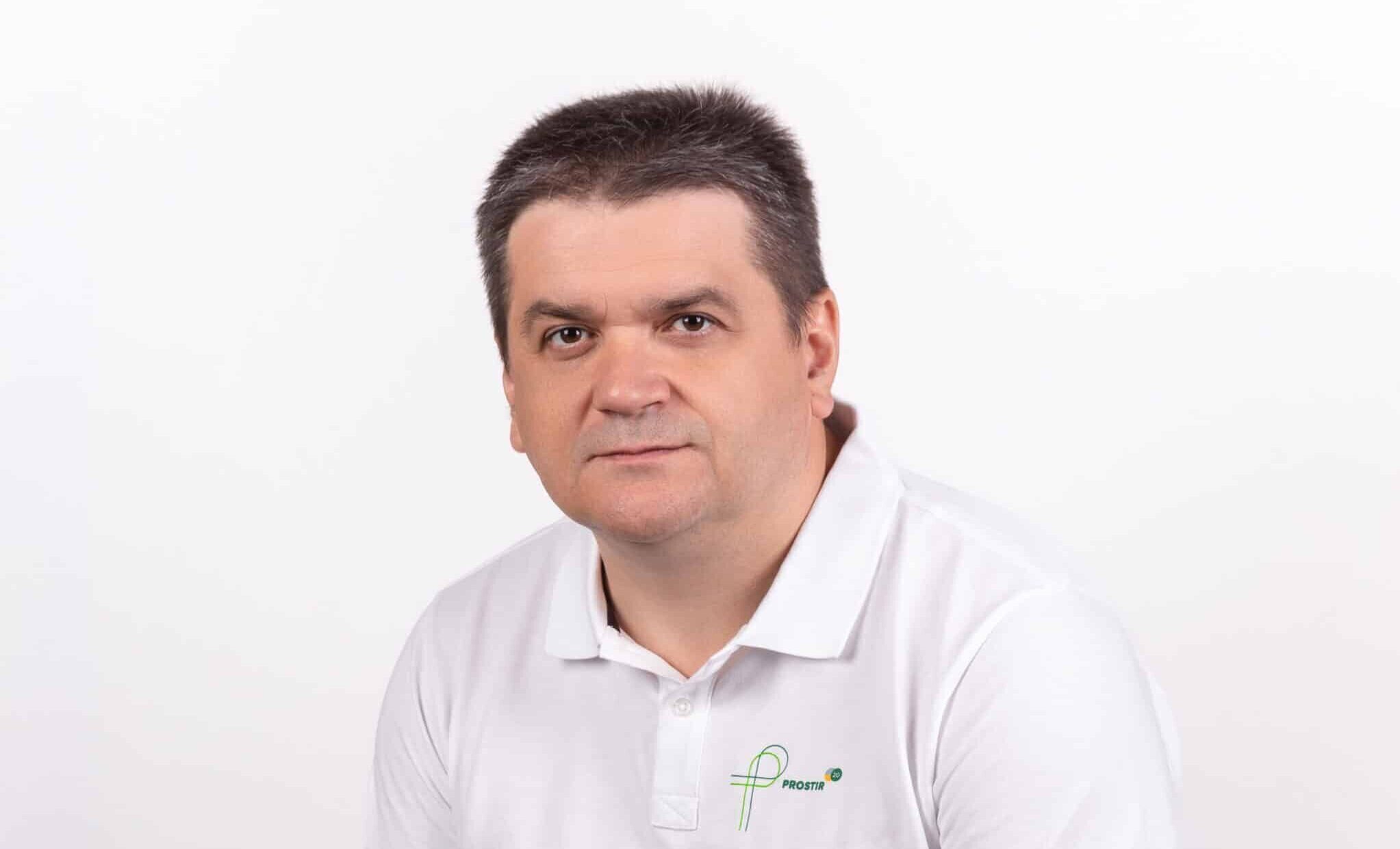


A career is always a series of decisions, challenges, and gradual growth — especially at the very beginning, when every experience shapes not only professional skills but also self-confidence and readiness to take responsibility.
For more than ten years, Nataliia Pinchuk has been growing together with UHY Prostir, having gone from her first steps in the profession to the role of Project Manager. In this conversation, she shares her career journey, values, approach to working with clients and teams, and advice for those who are just starting their professional path.
How did you first learn about UHY Prostir, and what attracted you most to the company at that time?
I was actively looking for a job and posted my résumé. Some time later, I received a call inviting me to take a test. From the very first meeting, I was attracted by the energetic, young team. I clearly remember a very strong inner feeling: I realized that this was exactly the place where I wanted and needed to stay.
You joined the company at the very beginning of your career. What was your first experience like, and what professional challenges did you face?
One of the first truly serious challenges was related to paying a client’s salaries: the flash drive with the client-bank keys broke, the backup key was kept in a safe, and the key to the safe was with the director, who was away on a business trip. There was a real risk of missing the payment deadline.
I pulled myself together quickly, negotiated with the bank, and arranged a courier for the urgent restoration of the keys. The bank operator even waited until the courier brought the new key so that we could send the payments the same day. Everything happened on pure adrenaline — now I remember that situation with a smile.
In general, there were many similar situations over the years. From the very beginning, it was important for me to work directly with clients, so I personally initiated replacing accountants during their vacations and took on their responsibilities. This later became one of the key drivers of my career growth.
Was there a moment when you realized you wanted to connect your professional path with UHY Prostir for the long term?
Yes, there was — and it remains relevant for me even today. For me, this company is not only about professional development, but also about stability and genuine support for employees. My respect and trust for the employer did not change during the pandemic or during the war. The company always treats people with understanding and values them — and that is why my attitude toward it is equally responsible.
What were your expectations at the start of your career? Which of them came true, and what turned out differently?
At the beginning, I did not have high expectations — I primarily saw it as an opportunity to learn and gain practical experience. I tried to be as involved as possible in all accounting processes. After about a year, it became clear that I was ready to move further up the career ladder, and the feeling that my work was meaningful was especially valuable to me.
Today, I work as a Project Manager: I lead multiple projects and coordinate the work of my own team. Over this time, I have gained experience working with various business sectors — from representative offices, agribusiness, startups, and IT to charitable foundations, NGOs, and the food industry.
Was there anyone on the team in the early years who had a particularly strong influence on your professional development?
Yes, it was Hanna Matseva. Thanks to her belief in me, her wisdom, mentorship, and constant support, I was able to confidently move toward my professional goals.
What was the turning point in your transition from accountant to project manager?
At a certain point, I realized that I was ready for a new level of responsibility and openly stated this to management. By that time, I was already independently managing projects end to end, organizing the work of assistants, consulting clients, and handling a large number of tasks and deadlines.
What was the hardest thing to “let go of” when moving from accounting to project management?
The most difficult part was letting go of operational accounting processes and the habit of doing everything myself. Delegation was not easy at first — I even felt at times that I did not fully understand what my role was anymore. Over time, that feeling disappeared, and I learned to structure my work differently.
Which skills from your accounting background help you most in your role as a project manager today?
A deep understanding of the essence of processes and problems. When the team comes to me with questions, I can quickly assess the situation and suggest solutions or the right direction.
What common misconceptions or unrealistic expectations from clients do you encounter most often?
Most often, it is the expectation of instant answers and the belief that one specialist can know absolutely everything. In such cases, it is important to explain that some issues require deeper analysis or the involvement of specialized experts — such as lawyers or auditors.
Another common myth is that accounting support is limited to preparing reports or paying salaries. In reality, modern outsourcing is about risk management, analytics, and supporting management decisions. Clients also sometimes underestimate the importance of systematization: timely document flow, accurate primary data, and process discipline — without which it is impossible to build stable financial accounting.
Over time, when clients see the results and the quality of well-structured processes, their perception changes — they begin to value a comprehensive approach and teamwork.
In your opinion, what does ideally structured cooperation between a client and an accounting outsourcing team look like?
The most effective model is one with a dedicated project manager and a team formed according to the client’s specific needs. In my practice, there was a case where a client was initially skeptical of this approach and insisted on working with just one specialist. Over time, they saw that teamwork allowed tasks to be completed faster, risks to be reduced, and process stability to be ensured. As a result, this model became the key advantage of our cooperation for them.
You work with many Ukrainian product companies. How does working with them differ from supporting other types of businesses?
The food industry and restaurant business operate in a mode of continuous operational flow — essentially in real time. Production, sales, write-offs, transfers, and cost recalculations happen daily. Without constant involvement in these processes, it is very easy to lose a holistic picture of the movement of goods and finances.
In addition to high dynamics, this sector has increased requirements for accounting accuracy: inventory and loss control, technological cards, correct calculations, and margins. A large number of operations requires clearly structured processes and automation. That is why accounting support in the restaurant business is not only about accounting, but also about supporting management decisions.
Which requests from Ukrainian companies have become noticeably more frequent or require significantly more expertise in recent years?
Recently, businesses have increasingly been seeking advice on the proper documentation of donations and financial assistance, as well as their tax implications. A significant portion of requests also relates to employee reservation (draft exemption) and operating under currency restrictions.
A separate area consists of accounting recovery projects—situations where it is critically important for a business to quickly regain control over its financial indicators.
How has the role of accounting outsourcing for businesses changed in recent years?
Businesses expect not just bookkeeping, but comprehensive expert support, analytics, and proactive solutions.
What is key for you in building effective teamwork?
Clear distribution of responsibilities, task control, and regular feedback are essential. It is also important to maintain open communication so that every team member understands the common goals and their role in achieving them. Trust, mutual support, and the opportunity to share ideas help the team work effectively even in complex or dynamic projects.
What is more important to you in a team: a high level of individual expertise or the quality of team interaction?
Ideally, it is a balance of both. Expertise allows each specialist to make the right decisions, while high-quality teamwork ensures that these decisions work in sync and deliver results for the client. In my work, I strive to create an environment where strong individual skills enhance the overall effectiveness of the team.
How do you help junior specialists adapt to working with demanding clients?
I teach — and continue to learn myself — to focus on results and approach requests analytically, without letting emotions take over. Together, we review cases, analyze possible solutions, and learn how to set priorities correctly. This helps junior specialists act confidently even in difficult situations.
You have been working at UHY Prostir for more than 10 years. How have you changed professionally during this time, and how do you think the company itself has changed?
Over these years, I have changed significantly: I have become more confident in making decisions, better at understanding business as a whole, and more appreciative of teamwork. I learned to combine operational tasks with project management and supporting people around me.
The company has also gone through a significant transformation: it has scaled up, adapted to modern challenges, built clear processes, and developed a growth strategy. Today, it is even more structured and stable.
Has your perception of career success changed over the years? If so, how?
The essence has remained the same: for me, success means continuous development, responsibility, and a sense of the value of my work. At the same time, today I see it more broadly — not only as personal professional growth, but also as the ability to help the team grow, support clients, and create effective and sustainable business processes.
What does “quality service” in accounting outsourcing mean to you today?
Quality service is when a client feels calm about operational processes, can focus on developing their business, and has clear financial indicators for decision-making. It is important that they can always rely on comprehensive expert support. For me, this means that the team works as a single mechanism, and the client feels that their business is in reliable hands.
What advice would you give yourself at the start of your career, knowing everything you know now?
Never give up and always believe in yoursell, even when it seems difficult or scary. Step by step, everything will work out, and the experience you gain will become your greatest strength.
What would you advise students or young professionals who are considering accounting outsourcing as a career path today?
Use this opportunity boldly. Accounting outsourcing allows you to gain unique experience in a short time, develop your skills, and work with various business sectors. It is truly an excellent start for those who want to grow quickly and learn through practice.
Interview by Kateryna Bohdan
Read also:
-
Legal Support of Business: Trends, Challenges, and Professional Principles — an Interview with Olha Petrukhina
-
How the auditor of the future thinks: an interview with Viktor Safinskyi, Head of the Audit Practice at UHY Prostir
-
Systematic approach, flexibility, and client focus: Inna Starovoit on the core principles of the UHY Prostir accounting outsourcing team