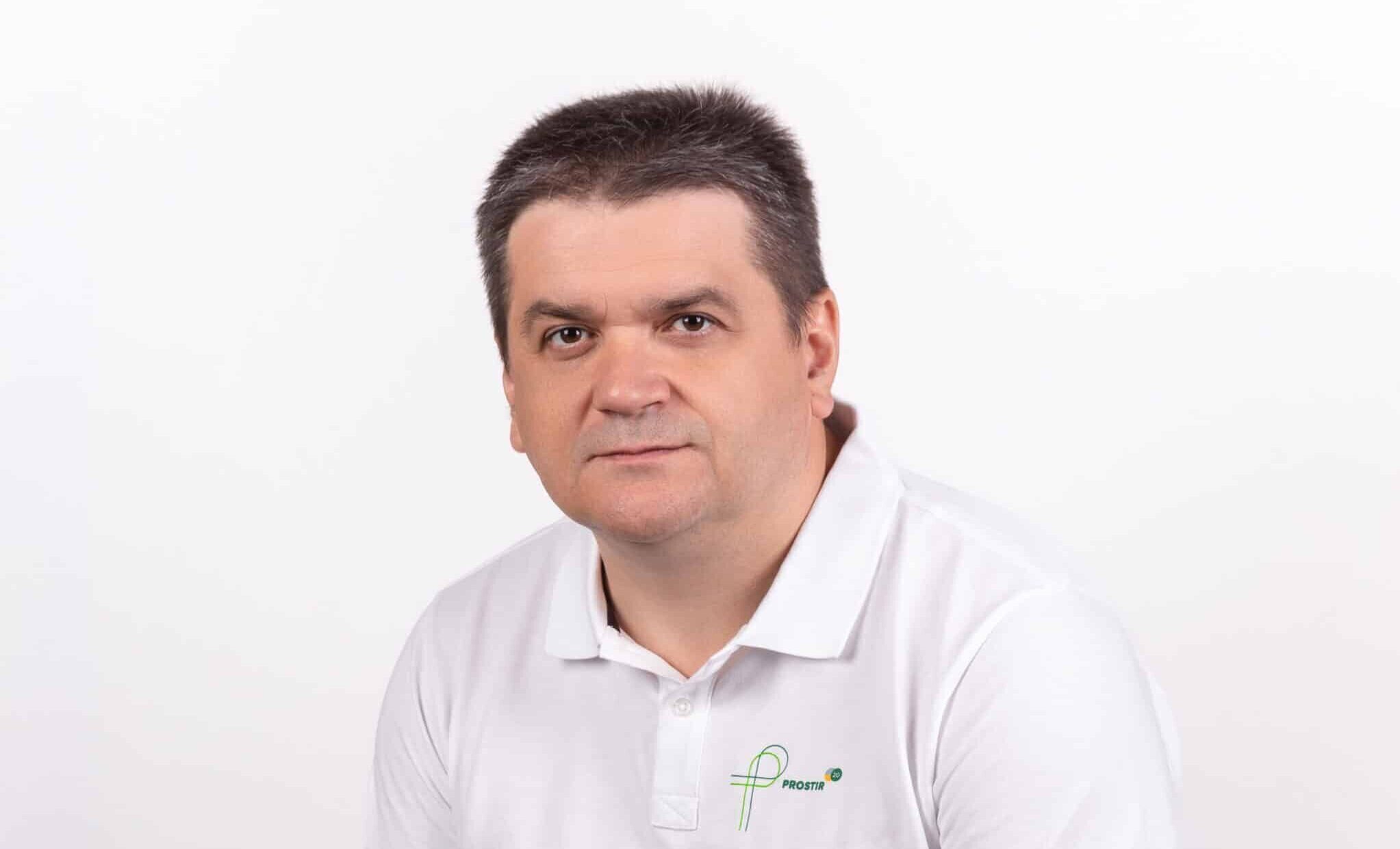


Accounting outsourcing is not only about numbers and reports. It’s about structure, attention to detail, and the ability to understand a client’s needs. In this interview, we spoke with Inna Starovoit — a project manager who has worked at UHY Prostir for over 16 years and leads one of the accounting outsourcing teams.
Inna shared how her journey with the company began, what helped her progress from assistant to team leader, how partnerships with foreign clients are built, and why it’s important in accounting to combine analytics with empathy.
Inna, how did you join UHY Prostir and the accounting outsourcing team?
I joined the company almost 17 years ago, starting my career in auditing. However, I quickly realized that I was more drawn to the dynamics and lively rhythm of accounting outsourcing. Once, I agreed to temporarily help the outsourcing team — literally for a few days. That’s when I realized how much I enjoyed the fast pace, the variety of tasks, and the opportunity to be part of clients’ businesses.
How did your journey in accounting outsourcing begin?
It began with a challenging project — an agricultural company that demanded maximum commitment. Workdays sometimes started at five in the morning, with business trips, constant activity, and communication with foreign clients. It was a real test. But it was when I understood how important it is to have a strong team that supports you even during the most intense periods. That experience toughened me and taught me not to fear complex tasks.
In your opinion, what is the main value that accounting outsourcing brings today?
For me, accounting outsourcing is not just a set of services but a partnership with the client. We don’t just perform operations — we help businesses work more efficiently: building processes, consulting on risk avoidance, and finding solutions in complex situations.
The greatest value, in my opinion, is that the client feels supported and at ease — knowing their financial side is under control and they can focus on business growth.
How would you describe your approach to working with clients?
My approach combines analytics and empathy. It’s important to me not only to deliver a service but also to understand what exactly the client needs — support, a quick solution, or process organization. I see my role as making the client’s business run as efficiently as possible.
Your team works with many international companies. Are there differences between working with Ukrainian and foreign clients?
Yes, there are noticeable differences. Foreign clients usually have a clear structure: well-defined responsibilities, deadlines, and standards. Ukrainian companies, on the other hand, are more flexible — they rely on quick decisions and live communication. With them, you must constantly adapt, react instantly, and find solutions on the spot.
I like both approaches: the international one teaches precision, while the Ukrainian one teaches speed and creativity in problem-solving.
What technologies help you in your work, especially with international clients?
In our daily work, we actively use SAP Business One and SAP ERP — powerful systems that provide a comprehensive view of the client’s business. Everything is interconnected: documents, analytics, reporting. This helps us find answers faster, align processes between teams, and maintain the high level of accuracy expected by international clients.
How has client communication changed in recent years?
Communication has become much faster. While earlier most issues were discussed via email, today clients prefer messengers like Telegram or WhatsApp. This has changed the work rhythm: decisions are made faster, approvals take minutes, and overall efficiency has increased significantly.
What trend in accounting outsourcing do you think will become key in the coming years?
Everything is moving toward speed and convenience — both for clients and for professionals. Businesses expect instant solutions, so the main trend is process automation and the use of modern software tools.
We already see AI gradually taking over routine tasks — from processing primary documents to generating reports. This automation will only increase over time. However, the role of the accountant won’t disappear — it’s transforming into one focused on analysis, consulting, and solution design.
Which skills do you think are most important for accountants today?
Today, technical accounting knowledge alone isn’t enough. It’s crucial to have emotional intelligence — to understand the client you’re working with. Sometimes the client doesn’t need numbers; they need support, explanations, or simply understanding.
The ability to listen, give timely advice, or even take a pause in communication — that’s what builds trust.
What advice would you give to young professionals starting their careers in this field?
Don’t be afraid to ask questions — real understanding comes through them.
Supporting a client in outsourcing isn’t only about numbers; it’s also about continuous learning. Even when it seems like you know everything, there’s always something new that can help you become a better version of yourself at work.
And finally, how would you describe the UHY Prostir accounting outsourcing team in one phrase?
We are a team of experts who work with love for what we do, maintaining a balance between professionalism and humanity, and proving every day that accounting is not only about numbers, but also about trust and partnership.
Interview by Kateryna Bohdan